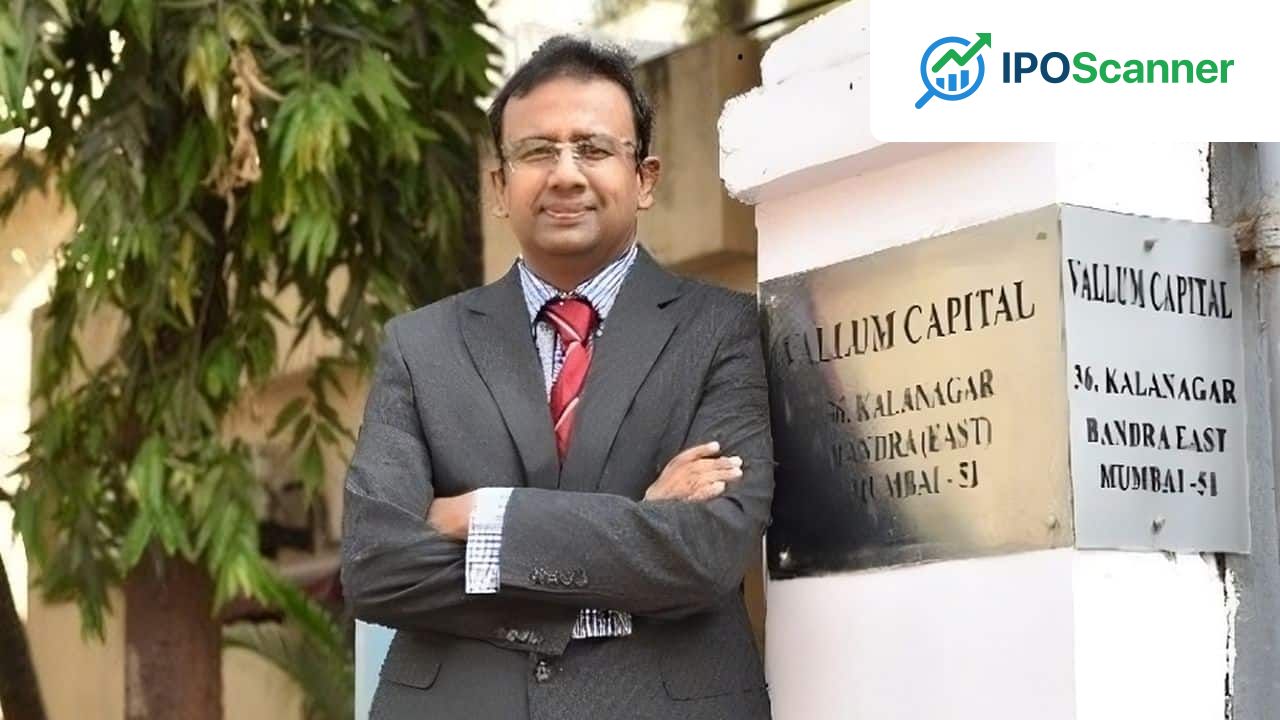
Exploration, Energy Security, and Ethanol Remain Key Investment Themes: Vallum Capital's Manish Bhandari
Market Outlook: Expert Weighs In on India's Economic Future
In the current market environment, exploration, energy security, and sugar-linked ethanol plays remain attractive themes, given their high earnings visibility, low import sensitivity, and strong cash-conversion characteristics, says Manish Bhandari, CEO and Portfolio Manager at Vallum Capital.
This assessment is based on the high earnings visibility and low import sensitivity of these sectors, which make them less vulnerable to global commodity shocks. As a result, patient capital is best placed in quality domestic businesses that are insulated from such shocks.
In an environment marked by historic FPI exits, Vallum Capital's CEO emphasizes the importance of investing in quality domestic businesses. These companies are less affected by global commodity shocks and are therefore more attractive to patient investors.
Read also: Treasury Yields Experience Largest Increase in Two Weeks Following Release of Labor Market Data
Private-Sector Financial Services Companies Also Look Attractive
In addition to exploration, energy security, and sugar-linked ethanol plays, private-sector financial services companies also look attractive, according to Vallum Capital's CEO. These companies benefit from resilient credit demand, strong capital positions, and a higher-for-longer rate environment that protects net interest margins.
| Sector | Resilient Credit Demand | Strong Capital Positions | Higher-for-Longer Rate Environment |
|---|---|---|---|
| Private-Sector Financial Services | High | High | High |
| Exploration and Energy Security | Medium | Medium | Medium |
| Sugar-Linked Ethanol Plays | Low | Low | Low |
RBI to Maintain Status Quo on Interest Rates
Read also: US-Iran Tensions Spark Uptick in Oil Prices Amid Global Market Decline
Most experts expect the RBI to maintain the status quo on interest rates this week. However, Vallum Capital's CEO believes that a rate hike would be warranted only if crude oil remains durably above $100 per barrel, materially higher than the RBI's $85 assumption, for a considerable period, and if CPI inflation breaches the 6 percent upper tolerance band.
The new CPI series, launched in February 2026, has increased the weight of housing, transport, and services while reducing food's share from 45.86 percent to 36.75 percent. This makes crude oil pass-through to headline inflation more direct in this cycle than before.
Market Risks and Opportunities
The war has led to a fragile export recovery and has negatively affected domestic consumption. The RBI will therefore need to strike a careful balance between growth challenges arising from a poor monsoon, slowing global growth, the impact of AI on India's economy, and emerging inflationary pressures.
Vallum Capital's CEO believes that the single most important market risk today is the free and uninterrupted flow of crude oil through critical chokepoints. FPIs have withdrawn over Rs 2.2 lakh crore from Indian equities in CY2026 so far, the largest such exit since portfolio investing was permitted in India in 1993.
Investment Opportunities
Investors are advised to take exposure to capital expenditure-linked sectors such as data centres, shipbuilding, and transformers. The investment cycle is structurally supported, with India Inc investing approximately Rs 10.5 trillion in FY26, and FY27 pipelines remaining aggressive across energy, data centres, and infrastructure.
However, many stocks in these areas have already priced in multi-year earnings growth. Valuation discipline and proper opportunity-size calibration are essential before taking exposure.
Energy Security Themes
The government is making significant efforts to reduce the economy's dependence on energy imports. Coal gasification is an important step in this direction. However, the execution risk in coal gasification, particularly around the quality of coal required, remains underappreciated.
Our research indicates that Indian coal typically has an ash content in the range of 30-45 percent, significantly higher than the 10-15 percent range for which most international gasification technologies are designed.
Rupee Appreciation
India faces a unique challenge, with its FDI flows heavily reliant on capital backed by venture capital and private equity funds, which account for approximately 40 percent or more of flows, compared with 20-25 percent globally.
The global AI theme has absorbed a large amount of capital, leaving India relatively disadvantaged in attracting such flows. For sustainable rupee appreciation, India needs faster growth in high-value-added exports and stable, long-duration capital inflows.
Investor Takeaway
Invest in quality domestic businesses insulated from global commodity shocks.
More in Economy

Treasury Yields Experience Largest Increase in Two Weeks Following Release of Labor Market Data

US-Iran Tensions Spark Uptick in Oil Prices Amid Global Market Decline

MoSPI Releases Uniform Norms for DDP Estimates with 2022-23 Base Year

