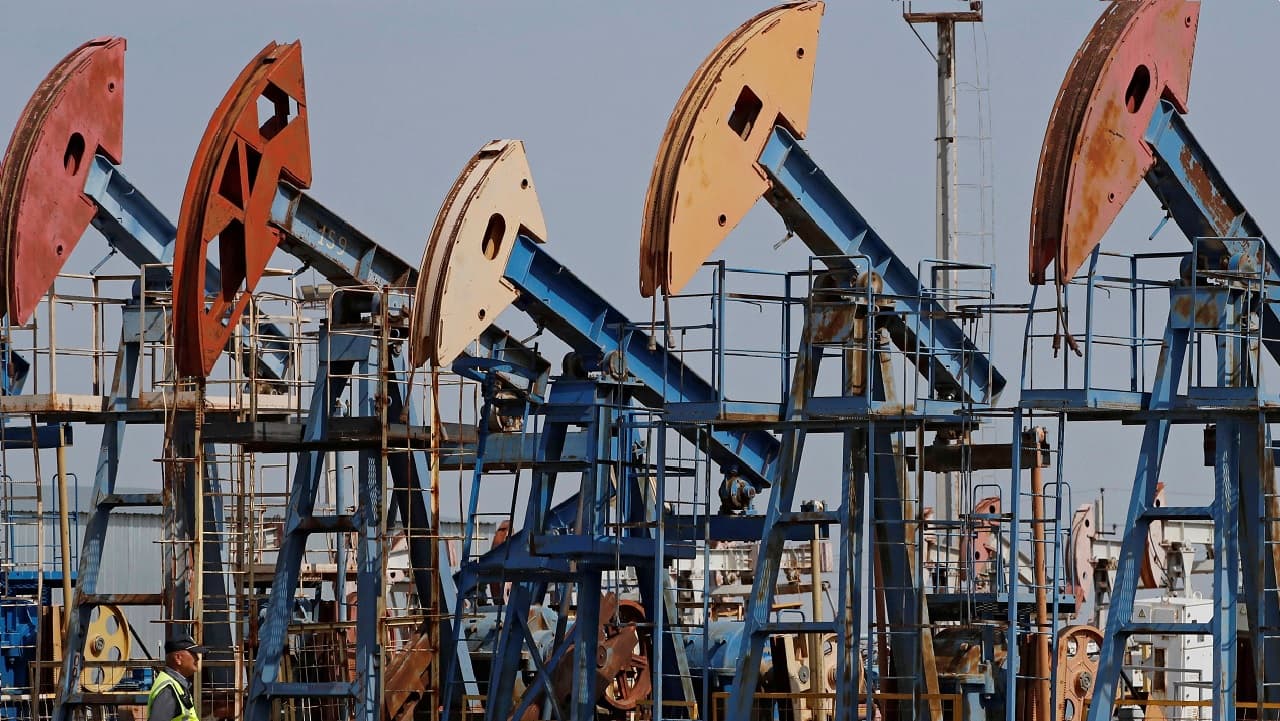
Crude Oil Price Holds Steady at $80, Risks Pushing Up Inflation and Widening Current Account Deficit
India's Economic Outlook Clouded by Rising Crude Oil Prices
Key Factors:
- $70 per barrel: Reserve Bank of India's (RBI) assumed average crude oil price for 2025-26
- $78 per barrel: Current lead crude oil price due to Middle East conflict
- $90 per barrel: Potential Brent crude price if Strait of Hormuz is disrupted
- 2.1%: RBI's projected CPI inflation for 2025-26
- 4.1%: RBI's projected CPI inflation for H1 of 2026-27
- 85%: India's crude oil import dependency
- 0.2-0.4 percentage points: Potential increase in CPI inflation if Brent crude sustains above $80
- 1.2-1.3%: Projected current account deficit (CAD) in FY26
- 1.5-1.6%: Potential CAD in FY26 if crude oil prices average $80-90
- 2%: Projected CAD for FY27
- 15-20 basis points: Potential impact on growth if crude oil prices sustain at $80 in FY27
Economic Analysis
Read also: Treasury Yields Experience Largest Increase in Two Weeks Following Release of Labor Market Data
The ongoing tensions in the Middle East are driving up crude oil prices, which could lead to increased inflation in India, a wider current account deficit, and a negative impact on growth. The RBI has assumed an average crude oil price of $70 per barrel for 2025-26, but current prices are higher at $78 per barrel. Industry sources indicate that if the Strait of Hormuz is disrupted, Brent crude prices could reach $90 per barrel.
Inflation Impact
Economists estimate that if Brent crude sustains above $80, it could lead to a 0.2-0.4 percentage point increase in CPI inflation, provided the prices of crude oil are passed through to retail prices. The RBI projects CPI inflation at 2.1% for 2025-26 and 4.1% for H1 of 2026-27.
Current Account Deficit
Read also: US-Iran Tensions Spark Uptick in Oil Prices Amid Global Market Decline
India imports around 85% of its crude oil needs, making it vulnerable to price spikes. A $10 per barrel rise in the average crude price over a year can worsen the CAD by about 0.3-0.5 percentage points of GDP. With crude oil prices averaging $80-90 instead of the low-$70s assumption, India's CAD in FY26 could widen to 1.5-1.6% of GDP and put pressure on the rupee.
Growth Impact
Economists estimate that growth could be hit by 15-20 basis points if crude oil prices sustain at $80 in FY27. The finance ministry has forecasted growth at 7-7.4% in FY27.
Fiscal Impact
The impact of rising crude oil prices on the government's fiscal math is expected to be minimal, as the government's revenue from oil marketing companies (OMCs) will be partially offset by higher costs. However, the potential rise in LPG subsidy, decline in PSU dividends, and potential rise in fertilizer subsidy cost could have a negative impact on the government's fiscal health.
Investor Takeaway
Investors should be cautious of potential inflation and growth impacts due to rising crude oil prices.
More in Economy

Treasury Yields Experience Largest Increase in Two Weeks Following Release of Labor Market Data

US-Iran Tensions Spark Uptick in Oil Prices Amid Global Market Decline

MoSPI Releases Uniform Norms for DDP Estimates with 2022-23 Base Year

