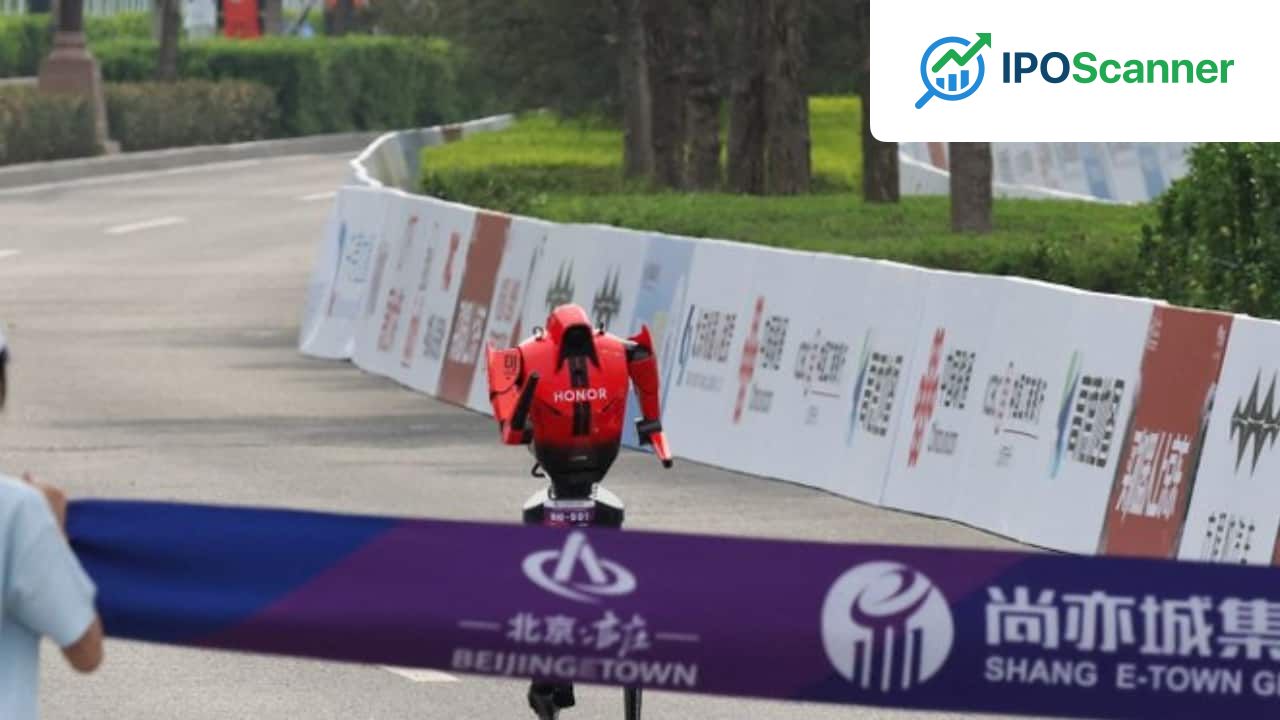
Chinese Robotics Compete in Beijing Half-Marathon Highlighting Technological Advancements
China's Humanoid Robot Half-Marathon Takes a Giant Leap Forward
On April 19, 2026, China's second humanoid robot half-marathon took place, marking a significant milestone in the evolution of this technology. A total of over 300 robots from more than 70 teams participated in the 21-kilometre course, alongside human runners, but separated by barriers.
One of the key differences this year is the introduction of autonomy. In the inaugural event held in 2025, nearly all participating robots relied heavily on remote control, with only a small fraction managing to complete the race. This time, organisers claim that around 40 percent of the machines will navigate the course independently, utilising advanced sensors, AI-driven decision-making, and enhanced locomotion systems.
The robot half-marathon serves as both a public spectacle and a technological benchmark. Engineers use this event to test the endurance, balance, and energy efficiency of humanoid robots in real-world conditions. Completing a 21-kilometre course requires more than just speed; it demands stability, battery optimisation, and the ability to adapt to uneven terrain and slopes, challenges that have long hindered the development of humanoid robots.
Read also: Google Pixel Watch Leak: Diver's Discovery Sparks Speculation
Initial results from the 2026 contest suggest significant progress. The fastest robots in this new generation not only completed the course but also finished in less time than many elite human competitors. According to reports, one of the most successful robots, developed by Honor, a China-based company, managed to complete the course in under 50 minutes.
These advancements highlight the rapid progress being made in the field. In contrast, the winning robot from the 2025 event took over two hours and 40 minutes to finish, with many machines experiencing overheating, falls, or requiring human intervention.
Behind the spectacle lies a broader ambition. China has become a major player in the global deployment of humanoid robots, and events like this serve as a test run and showcase. They provide companies with the opportunity to see what works in real-world conditions and demonstrate their progress to the world.
However, it's essential to maintain realistic expectations. While a robot completing a half-marathon is undoubtedly impressive, translating this into something useful in everyday life is a vastly different challenge. Humanoid robots still need to develop the ability to think quickly, be flexible, and consistent in situations such as working on a factory floor, assisting in hospitals, or responding to disaster zones.
Read also: Chinese Startup Claims AI Coding Capabilities Exceed Those of GPT-5.5: A Detailed Examination
| Year | Number of Robots | Percentage of Autonomous Robots |
|---|---|---|
| 2025 | Over 300 | Less than 5% |
| 2026 | Over 300 | Around 40% |
Comparison of Robot Half-Marathon Performance
| Year | Winning Robot Time | Elite Human Competitor Time |
|---|---|---|
| 2025 | Over 2 hours and 40 minutes | Less than 1 hour and 30 minutes |
| 2026 | Under 50 minutes | Less than 1 hour and 30 minutes |
More in General
Google Pixel Watch Leak: Diver's Discovery Sparks Speculation

Chinese Startup Claims AI Coding Capabilities Exceed Those of GPT-5.5: A Detailed Examination

Google Unveils Gemini Omni: AI-Powered Video Creation from Text Input