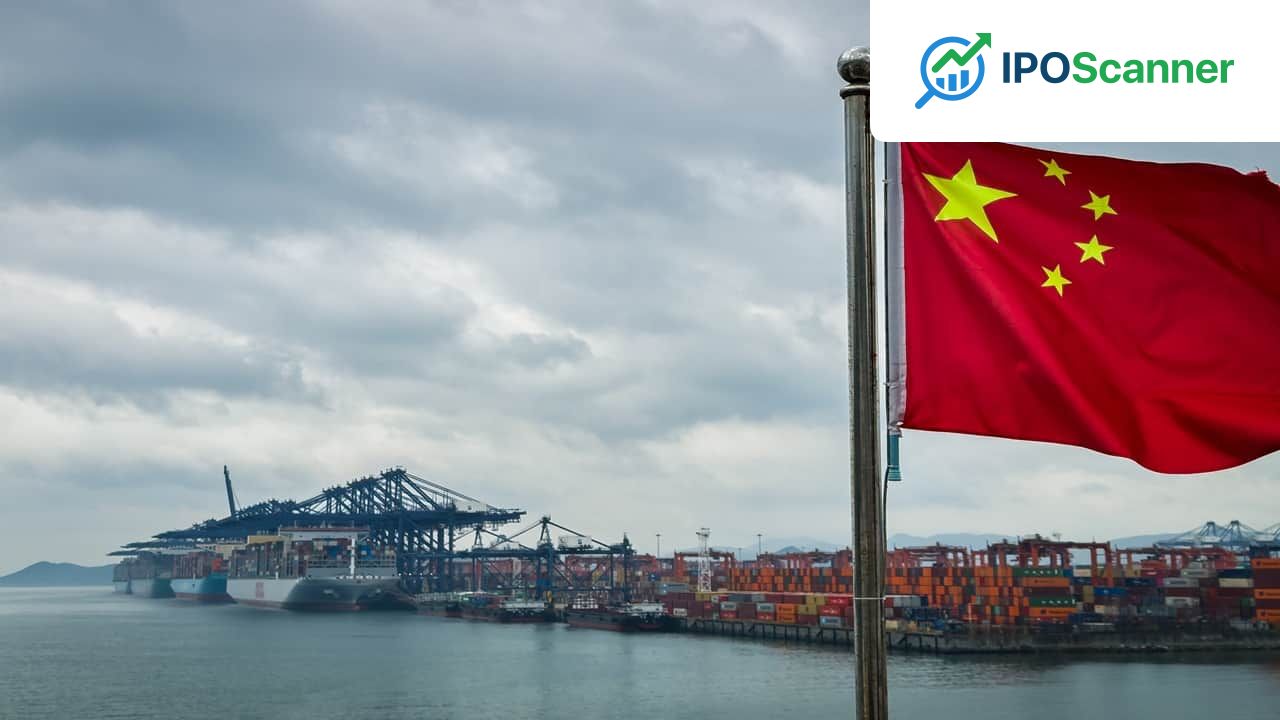
China's Export Earnings Surpass $500 Million Per Hour Amid AI-Driven Growth
US and China Economies Draw Strength from AI Boom Amid Decoupling Efforts
The US and Chinese economies, despite ongoing decoupling efforts, are finding common ground in the rapidly growing field of artificial intelligence (AI). According to recent data, China's overseas sales of semiconductors, computers, and other AI-related products accounted for approximately half of China's export growth in April, reaching a record high of $359 billion.
This surge in exports, coupled with increased investment in AI data center equipment, is expected to continue fueling economic growth in both countries. In the US, giant tech firms, including Alphabet Inc. and Meta Platforms Inc., plan to invest as much as $725 billion in capital expenditures this year, primarily in AI-related projects. Meanwhile, China has emerged as the world's largest supplier of AI-related goods, according to research by economists at Standard Chartered Plc.
| Country | AI Investment |
|---|---|
| US | Leading all countries |
| China | Largest supplier of AI-related goods (2025) |
| South Korea | Major producer of semiconductors |
| Taiwan | Major producer of semiconductors |
Read also: Treasury Yields Experience Largest Increase in Two Weeks Following Release of Labor Market Data
The boom in AI trade has also led to a significant increase in exports from major Asian economies, including South Korea and Taiwan. China's exports of integrated circuits have roughly doubled in value during President Donald Trump's current term in office, reaching a record high of $31 billion in April.
Despite ongoing trade tensions and export controls imposed by the US, China has been gaining dominance in so-called legacy chips, which remain essential to a wide array of electronics. China's AI chip self-sufficiency ratio has improved from 10% five years ago to an estimated 41% in 2025, according to Morgan Stanley, which expects it to reach 86% by 2030.
The AI boom has also provided relief to economies in Asia, particularly China, as manufacturers struggle to cope with rising raw material costs linked to the war in Iran. While AI-linked exporters have benefited from surging chip prices, the whole of China is shouldering the burden of rising oil and gas prices.
China's vehicle exports have also seen a significant surge, with a 54% increase in the first four months of 2026, following a 21% gain last year. The value of vehicles shipped overseas hit the second-highest in history in April, reaching over $16 billion.
Read also: US-Iran Tensions Spark Uptick in Oil Prices Amid Global Market Decline
The AI boom is pushing both Chinese exports and imports to record highs, with foreign purchases in April soaring 25% from a year ago to $275 billion. Imports from South Korea grew more than 60%, and those from Taiwan increased over 20%.
| Country | Import Growth (April 2026 vs. April 2025) |
|---|---|
| South Korea | >60% |
| Taiwan | >20% |
| China | 25% |
The long-term outlook for China's export growth will depend on its ability to overcome the technology bottleneck, particularly in developing high-precision chips. A swift increase in chip self-sufficiency could lead to relaxed US chip export controls, suggesting a possible move from total disengagement toward selective containment.
Investor Takeaway
Investors should be aware of the growing importance of AI-driven exports in China's economy.
More in Economy

Treasury Yields Experience Largest Increase in Two Weeks Following Release of Labor Market Data

US-Iran Tensions Spark Uptick in Oil Prices Amid Global Market Decline

MoSPI Releases Uniform Norms for DDP Estimates with 2022-23 Base Year

