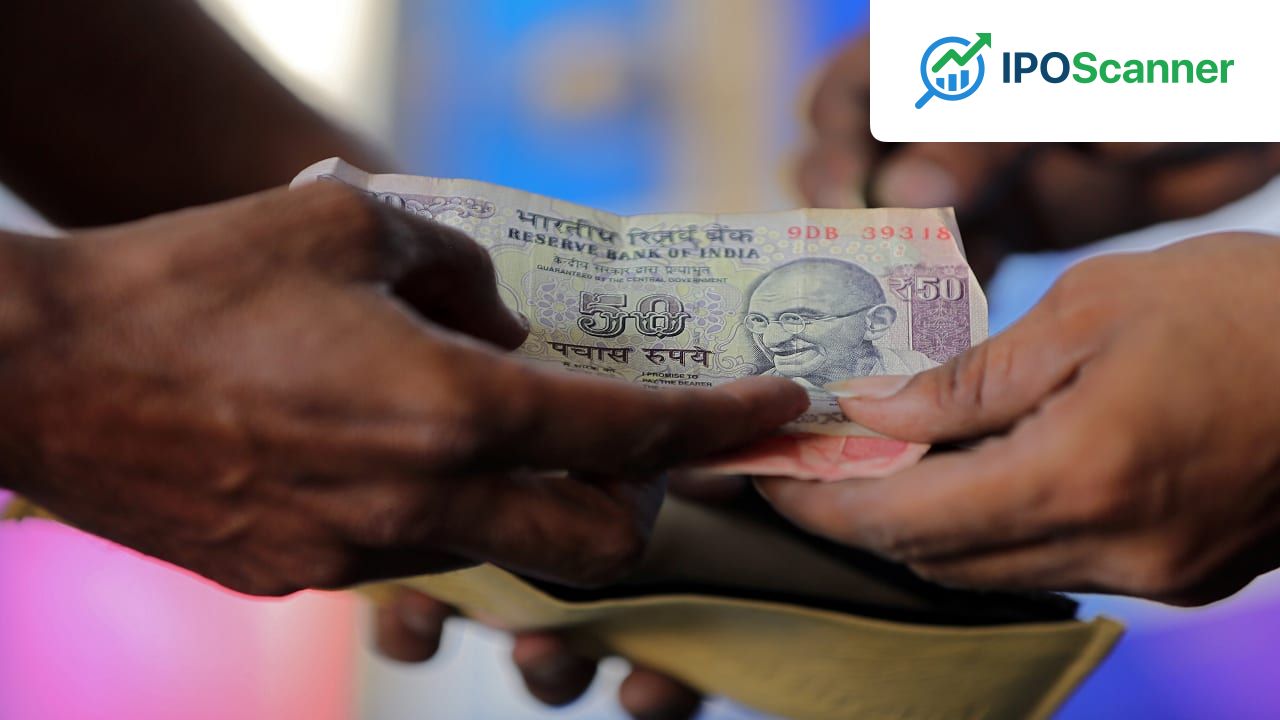
Cash Transfers to Women Yield Unintended Long-Term Consequences
Unconditional Cash Transfers to Women: A Game-Changer in India's Welfare Policy
Women in India continue to bear disproportionate burdens of unpaid work, hold weaker claims over household resources, and remain under-represented in the formal labor force. In response to this, a targeted instrument has gained ground in recent years - the unconditional cash transfer to women. The Economic Survey 2025-26 estimates that aggregate spending on such schemes will touch ₹1.7 lakh crore in FY26, with the number of states running them rising more than fivefold between FY23 and FY26.
The scale of these transfers is no longer marginal, with half of the implementing states estimated to be in revenue deficit. However, the policy conversation cannot stay confined to fiscal arithmetic. The question is whether these transfers are doing something the standard expenditure categories were never built to detect.
Direct Benefit Transfers: A Misaligned Framework
Read also: Treasury Yields Experience Largest Increase in Two Weeks Following Release of Labor Market Data
Direct benefit transfers, especially unconditional ones, sit awkwardly in the public finance hierarchy. They are classified as revenue expenditure, assumed to dissipate into routine consumption, and contrasted unfavorably with capital spending and its visible multipliers. This framing is intuitive but incomplete, treating the household as a passive endpoint of expenditure rather than a site where economic behavior is shaped.
Odisha's SUBHADRA Scheme: A Well-Documented Case
Odisha's SUBHADRA scheme, launched in September 2024, is a well-documented case that provides valuable insights into the effects of unconditional cash transfers to women. Under SUBHADRA, eligible women aged 21 to 60 receive ₹10,000 annually over five years. A large statewide survey, SUBHADRA Samikhya, conducted by IIM Sambalpur and the Department of Higher Education, drew on a stratified random sample of 22,000 beneficiaries.
| Category | Percentage of Fund Use |
|---|---|
| Business Setup | 26% |
| Savings and Asset Creation | 15% |
| Consumption | 59% |
Read also: US-Iran Tensions Spark Uptick in Oil Prices Amid Global Market Decline
The survey found that 26% of fund use was linked to business setup, with a higher percentage among self-employed and micro-entrepreneur beneficiaries. This suggests that unconditional transfers are leading to productive capacity at the household level, contradicting the conventional assumption that these transfers are solely for consumption.
The Deeper Effect: Agency, Not Spending
The survey also found that 63.9% of beneficiaries can now make financial decisions independently, 59.3% report greater confidence in managing money, and 20% observed improved standing within the family. These describe a structural shift in household decision-making, with cash flowing through women rather than around them. This matters because the standard fiscal framework has no category for these effects.
Cash Without Capability: A Ceiling
While the data suggests that unconditional transfers can lead to productive capacity and agency, it also reveals that cash without capability has a ceiling. Only 6.6% of respondents utilized funds for skill development, and only 12.4% expressed interest in formal skill training. A woman can buy a sowing machine, but she cannot acquire the digital skills to access wider markets or the financial literacy to scale credit responsibly.
Fiscal Durability: A Challenge
The transfer's developmental returns are unevenly distributed, and the women who need it most may be those least equipped to convert it into the economic outcomes the data celebrates. Additionally, with half the implementing states in revenue deficit, sustaining these schemes through political and economic cycles is genuinely uncertain.
Lessons from Odisha's SUBHADRA Scheme
The lesson from Odisha's SUBHADRA scheme is not that cash transfers work, full stop. They work when three conditions are held:
- Targeting: They must be targeted to women rather than households.
- Capability Building: They must be paired with skilling, market linkage, digital and financial literacy, since cash opens possibilities, but capability helps get the economic outcomes.
- Feedback Infrastructure: They must be accompanied by mechanisms that let the state observe what beneficiaries are doing with the money.
Odisha's evidence does not settle the larger debate about cash transfers. It can, however, change what the debate is about. The question should no longer be whether unconditional transfers to women are fiscally responsible. It should be whether the categories we use to evaluate them can see what they do.
More in Economy

Treasury Yields Experience Largest Increase in Two Weeks Following Release of Labor Market Data

US-Iran Tensions Spark Uptick in Oil Prices Amid Global Market Decline

MoSPI Releases Uniform Norms for DDP Estimates with 2022-23 Base Year

