Building Trust and Transparency in India's Agricultural Labour Market through Technology
India's Agricultural Labour Conundrum: A Problem of Productivity and Labour Organisation
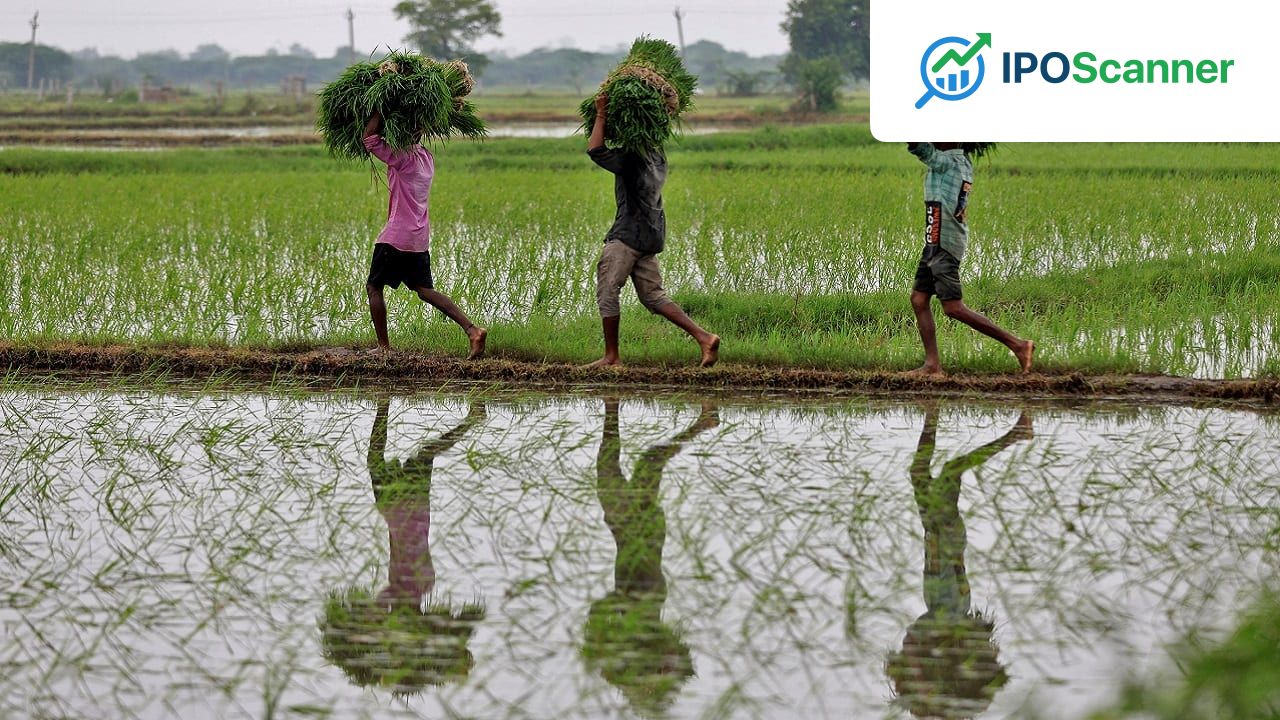
India's agricultural sector employs nearly 45% of the country's workforce, yet contributes less than 18% to the country's GDP. This stark contrast is not a demographic accident, but a productivity and labour-organisation problem that has led to the founding of Bharat Intelligence. With close to 14 crore agricultural labourers, the sector is a significant contributor to the country's workforce, but its informal architecture and lack of data-driven market-making have hindered productivity growth.
The Informal Sector: A Structural Problem
More than 90% of agricultural workers remain informal, a figure that compares poorly with other sectors such as construction and services, where informality runs at roughly 70%. This is not a residual problem, but a structural one that sits at the centre of why agricultural productivity has remained stubbornly low despite years of policy attention. The market connecting farmers and workers does not function properly, leading to chronic shortages of timely and skilled labour, underemployment, volatile wages, and repeated seasonal migration.
Read also: Treasury Yields Experience Largest Increase in Two Weeks Following Release of Labor Market Data
Breaking Down Information Asymmetry
The starting point for Bharat Intelligence was not a product idea, but an observation about where information asymmetry causes the most concentrated damage. Farmers across horticulture belts report chronic shortages of timely and skilled labour, while rural workers face underemployment and volatile wages. The market connecting them does not function properly, with contractors capturing value precisely because they hold information that neither the farmer nor the worker possesses. Transparency, not disruption, is what the market needs.
Learning the Difference Between Utility and Adoption
The early months of building Bharat Intelligence were a rapid education in the distance between a compelling thesis and a working reality. The first assumption that needed revising was about adoption. Utility and adoption are not the same thing when behaviour change is involved. A farmer who has managed labour relationships through informal networks for decades does not switch the moment a better-designed alternative arrives. Trust was not a downstream outcome of a good product, but a prerequisite for the product being used at all.
Read also: US-Iran Tensions Spark Uptick in Oil Prices Amid Global Market Decline
| Assumption | Reality |
|---|---|
| Adoption is a straightforward process | Utility and adoption are not the same thing when behaviour change is involved |
| Focus on acquisition | Focus on presence and building trust |
| Urban technology thinking | Rural users require a different interface design |
Rethinking the Interface for Rural Users
The second assumption that failed was about interface design. Early versions of the product carried the invisible grammar of urban technology thinking: structured menus, selection flows, and multi-step inputs. For users encountering a digital interface for the first time, this grammar was not intuitive, but alienating. Voice interfaces became central far earlier than planned, not because of a strategic pivot, but because user behaviour made the need undeniable.
Competing Against Past Disappointment
The third lesson was about accumulated disappointment. In communities where previous technology interventions, agricultural apps, government schemes, and NGO programmes had arrived with promise and disappeared without impact, the threshold for sustained engagement is genuinely high. The competition was not other products, but the memory of things that had not worked. Progress began to look different as a result, with less focus on the number of users onboarded and more on whether a farmer returned, whether a contractor referred someone, and whether the information provided was actually being acted upon.
Building Trustworthy Agricultural Intelligence
Bharat Intelligence is building towards a standard of intelligence that is embedded, accessible, and trustworthy enough to survive a first season and then a second. This is not a policy footnote, but an execution risk that India cannot afford to take. The country is attempting to scale agricultural exports and horticulture output on top of a labour market that remains fundamentally broken. Technology is the more tractable part of the challenge, but designing intelligence that is legible to the people it is meant to serve is the harder work.
More in Economy

Treasury Yields Experience Largest Increase in Two Weeks Following Release of Labor Market Data

US-Iran Tensions Spark Uptick in Oil Prices Amid Global Market Decline

MoSPI Releases Uniform Norms for DDP Estimates with 2022-23 Base Year

