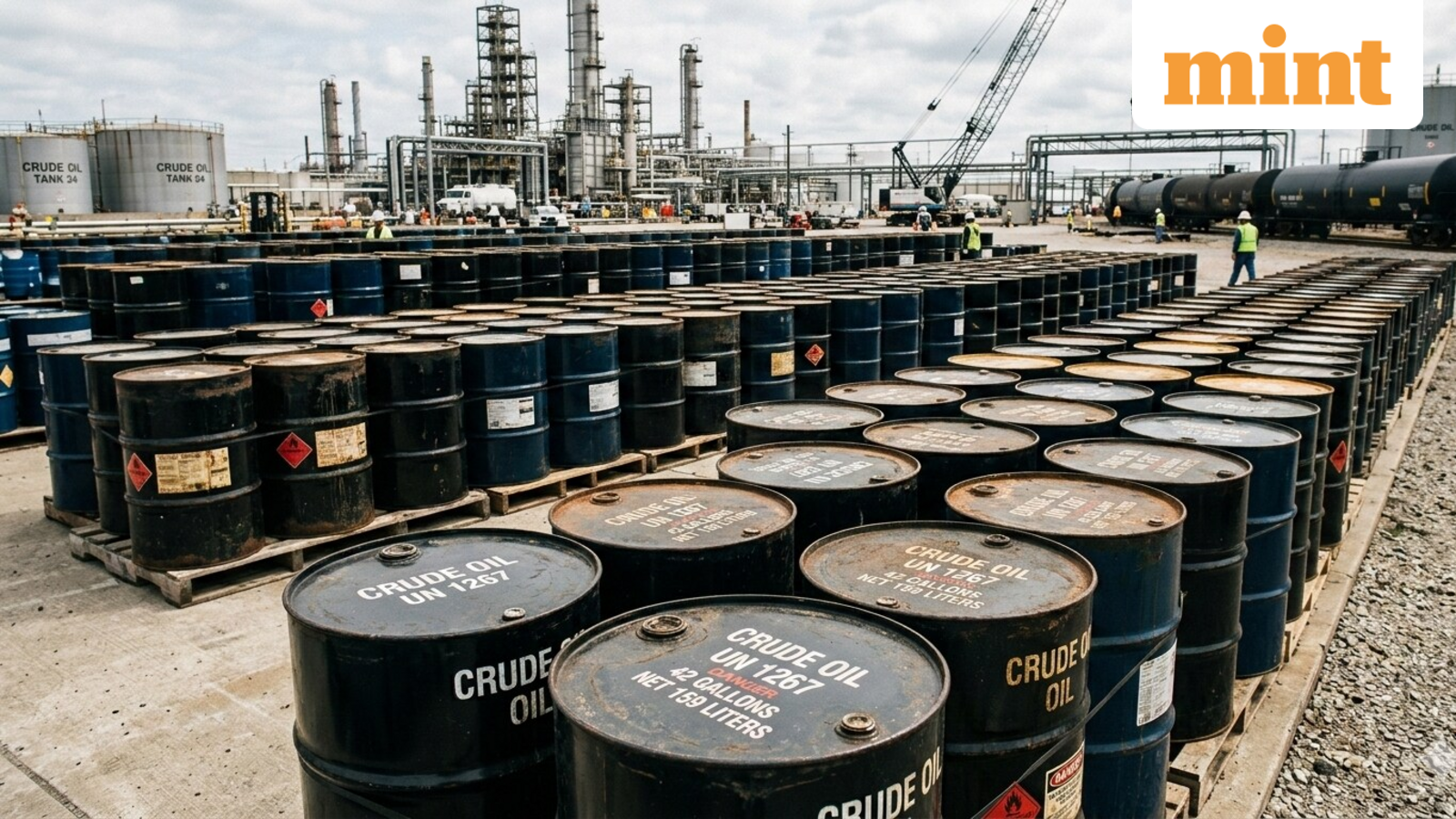
Brent Price Hitting $100: Experts Warn of Potential Disruptions for India Amid US-Iran Tensions
JM Financial Sees India Vulnerable to Middle East Escalation
Global Risk Levels Elevated
The recent escalation in the Middle East has led to a significant increase in global risk levels, with JM Financial warning that India may be disproportionately vulnerable to the economic fallout.
Oil Shock: India's Structural Weakness
Read also: Treasury Yields Experience Largest Increase in Two Weeks Following Release of Labor Market Data
The coordinated US-Israel strikes on Iran have raised the probability of retaliatory measures and potential disruption to oil transit routes, particularly the Strait of Hormuz, which accounts for nearly 20% of global oil flows and over 40% of India's crude imports.
Key Exposure
India's high dependence on imported oil, with over 85% of its oil needs met through imports, makes it particularly exposed to the energy shock. A sustained closure of the Strait of Hormuz could push crude prices above $90 per barrel, with a broader regional war driving prices beyond $100 per barrel.
Transmission Chain
Read also: US-Iran Tensions Spark Uptick in Oil Prices Amid Global Market Decline
Higher crude prices would increase inflation risk, pushing bond yields higher and compressing equity valuation multiples. This would have a cascading impact on the entire market, with the rupee likely to face near-term depreciation pressure.
Sectoral Impact
Oil marketing companies, paints, tyres, aviation, and chemicals are expected to face margin compression from higher input costs, while upstream oil producers such as ONGC and Oil India may benefit from stronger realizations. Defence names like HAL and BEL could see sentiment support.
Key Takeaways
- Crude is the dominant macro variable for Indian equities in the current escalation scenario.
- India's high oil import dependency makes it vulnerable to energy shocks.
- A sustained closure of the Strait of Hormuz could push crude prices above $90 per barrel.
- The impact of higher crude prices would cascade across the entire market, with implications for inflation, currency, fiscal dynamics, and corporate margins.
Investor Takeaway
Investors should be cautious of potential disruptions in the energy market due to rising tensions in the Middle East.
More in Economy

Treasury Yields Experience Largest Increase in Two Weeks Following Release of Labor Market Data

US-Iran Tensions Spark Uptick in Oil Prices Amid Global Market Decline

MoSPI Releases Uniform Norms for DDP Estimates with 2022-23 Base Year

