Bond Tokenization: A New Era in Investing
Tokenisation of Corporate Bonds: A New Frontier for the Indian Securities Market
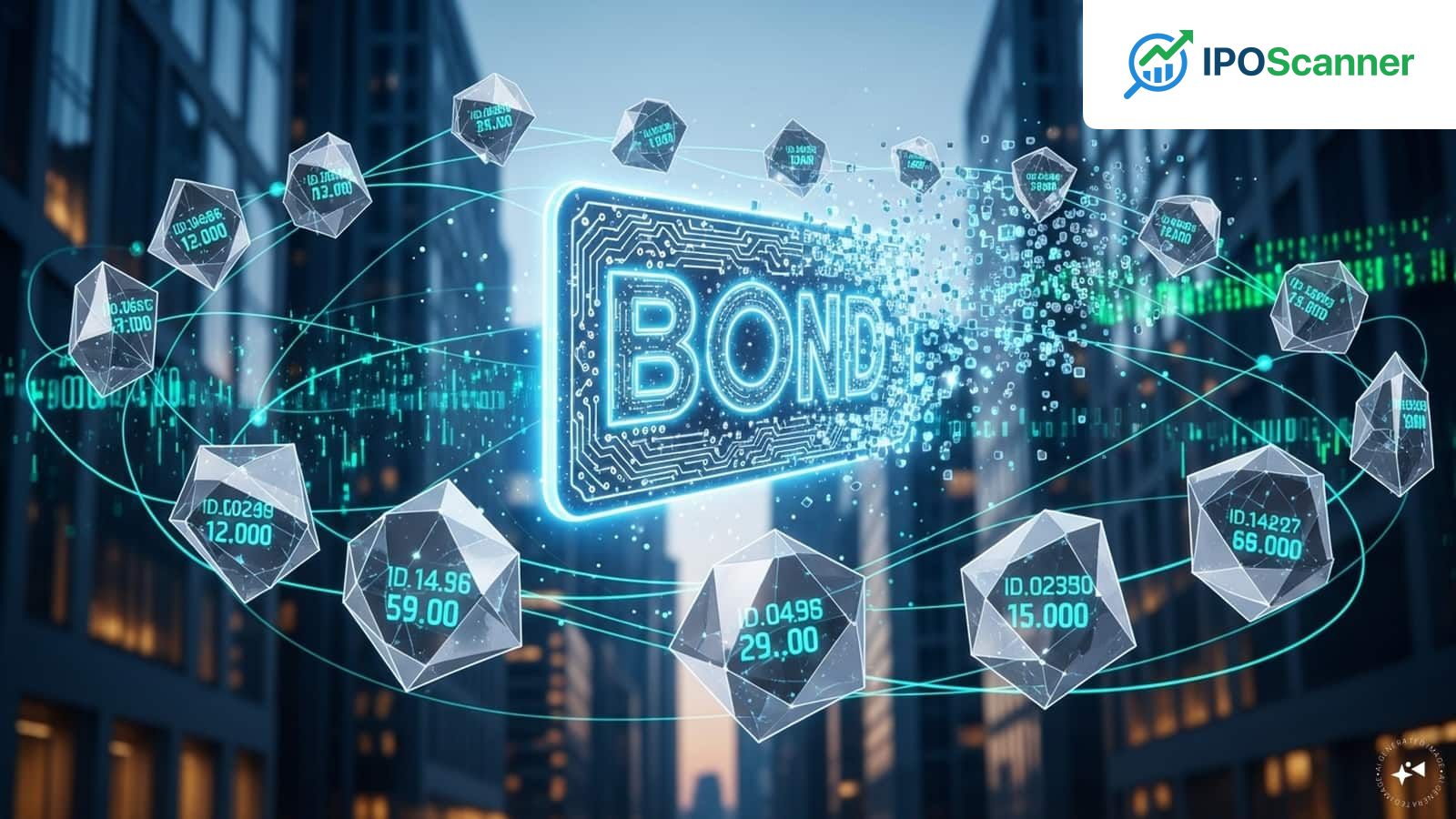
The Securities and Exchange Board of India (SEBI) is exploring a pilot programme for tokenised bonds, a process that converts traditional corporate bonds into digital tokens using Distributed Ledger Technology (DLT). This innovative approach has the potential to enable faster settlement, better transparency, and potentially improve liquidity in debt markets.
Tokenisation of corporate bonds involves the creation, issuance, or representation of these securities on a digital token ledger or a programmable platform. In the context of the Indian securities market, this process leverages DLT to transform traditional, manual, and institution-centric workflows into real-time, asset-centric networks. SEBI Executive Director Maninder Cheema has highlighted the benefits of tokenisation, stating that it could enable instant settlement, enhanced transparency, smart contracts, and potentially improve liquidity by way of enabling anonymisation.
Vineet Agrawal, co-founder of Jiraaf, believes that tokenisation has the potential to simplify access, enable smaller ticket sizes, improve traceability, and create a more seamless investment experience. With the corporate bond market already witnessing strong growth, such initiatives can play an important role in taking bonds to a wider set of Indian investors while keeping transparency, regulation, and risk awareness at the center.
The project utilises a permissioned infrastructure called the Unified Markets Interface (UMI), which operates on a Securities Ledger that serves as a parallel execution and settlement layer alongside the existing depository framework. This system offers several key features, including:
| Feature | Description |
|---|---|
| Atomicity | Execution of multiple steps (such as the transfer of funds and securities) as a single, inseparable transaction |
| Programmability | Smart contracts are embedded within the tokenised asset to automate lifecycle events |
| Fractionalization | Bonds can be divided into smaller, divisible units, lowering ticket sizes and encouraging wider participation from retail investors |
| Single Source of Truth | All participants operate on a shared ledger, eliminating the need for repetitive file exchanges and manual reconciliations |
Key benefits to the investor include:
- Faster settlement: Transactions can settle near-instantaneously through atomic settlement.
- Improved capital Efficiency: Funds for unsuccessful bidders in the primary market are released within minutes rather than being locked up for days.
- Reduced costs: Automation through smart contracts minimises the need for multiple intermediaries and lowers operational expenses.
- Enhanced transparency: The blockchain provides an immutable audit trail, improving trust and regulatory oversight.
Read also: RBI Policy Preview: A Cautionary Wait Ahead
If adopted at scale, tokenisation could make bond investing more efficient and accessible, while reducing some of the friction that exists in traditional bond trading.
Investor Takeaway
Tokenization of corporate bonds may improve liquidity and transparency in debt markets.
More in Economy

FirstClub Secures $55 Million in Funding from Peak XV, Sofina, and Other Investors 9 Months After $22 Million Series A Round
RBI Policy Preview: A Cautionary Wait Ahead

RBI Rate Cuts May Come to an End Amid Rising Oil Prices and Weakening Rupee: Expert Analysis