Bank for International Settlements Introduces Enhanced Safety Protocols for Wheelchairs, Walking Aids, and Braille Signage.
India Aligns Disability-Aid Industry with International Benchmarks
The Bureau of Indian Standards (BIS) has published six new standards for assistive products, ranging from elbow crutches to portable wheelchair ramps. This move is aimed at aligning India's disability-aid industry with international benchmarks, as the country seeks to improve accessibility for persons with disabilities.
The new standards, developed under the Indian Council of Medical Research's National List of Essential Assistive Products initiative, cover mobility aids, accessible design requirements for tactile maps and braille signage, and portable ramps for wheelchair users navigating steps and public buildings. The Consumer Affairs Ministry said in a statement that the standards were formulated by BIS's Technical Committee on Assistive Products, which draws on expertise from industry, academia, and government bodies, including the Artificial Limbs Manufacturing Corporation of India, the Indian Council of Medical Research, and the All India Institute of Medical Sciences in New Delhi.
Mobility Aids
Read also: Treasury Yields Experience Largest Increase in Two Weeks Following Release of Labor Market Data
The standards for elbow crutches, published as IS 18558 (Part 1): 2025, align with the ISO 11334-1 international standard. These standards set out requirements and test methods for fully equipped crutches, covering handgrips and tips. The specifications address safety, ergonomics, performance, and mandatory information that manufacturers must supply, including marking and labelling requirements.
The standards for walking sticks are covered under two separate standards. IS 5145: 2026, an indigenous standard developed in consultation with Indian industry experts, prescribes material, shape, dimensional, workmanship finish, and performance requirements across a range of stick types, including wooden, cane, aluminium, plastic, and rubber. A companion standard, IS 18558 (Part 4): 2025, aligned with ISO 11334-4, addresses walking sticks with three or more legs, setting requirements for handles and tips alongside safety, ergonomics, and performance criteria.
Accessible Design
The standard for tactile guide maps, IS 19189: 2025, aligned with ISO 19028, prescribes what information tactile guide maps must include and how they should be designed and displayed. This standard is aimed at helping people who are blind or have low vision navigate public buildings, transport areas, and parks independently and safely.
Read also: US-Iran Tensions Spark Uptick in Oil Prices Amid Global Market Decline
A separate accessible design standard, IS 19190: 2025, aligned with ISO 17049, covers the application of braille on signage, equipment, and appliances. It sets out dimensional parameters for braille characters, specifies the characteristics of materials to be used, and provides guidelines for practical implementation across public and commercial environments.
Portable Ramps and Industry Context
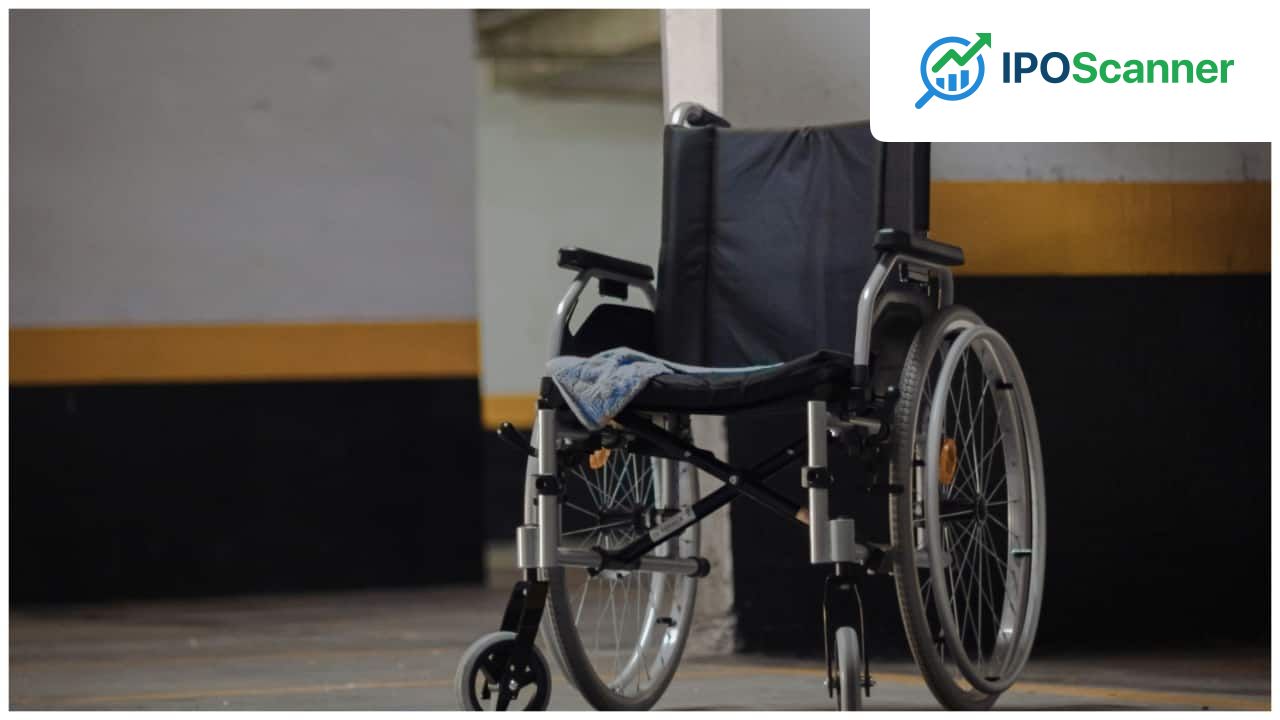
IS 19631: 2026, an indigenous standard, covers portable ramps for wheelchair users, as well as people pushing strollers or carts. This standard applies to powered and manual wheelchair users, older people, and children, with or without caregiver assistance, across home, workplace, and community settings.
The implementation of these new standards supports the federal government's Accessible India Campaign to seek universal accessibility for persons with disabilities. India's ageing population has driven rising demand for assistive technologies, and compliance with the new standards would help domestic manufacturers meet international quality benchmarks and open pathways to export markets, while encouraging innovation with minimum safety and performance thresholds.
More in Economy

Treasury Yields Experience Largest Increase in Two Weeks Following Release of Labor Market Data

US-Iran Tensions Spark Uptick in Oil Prices Amid Global Market Decline

MoSPI Releases Uniform Norms for DDP Estimates with 2022-23 Base Year

