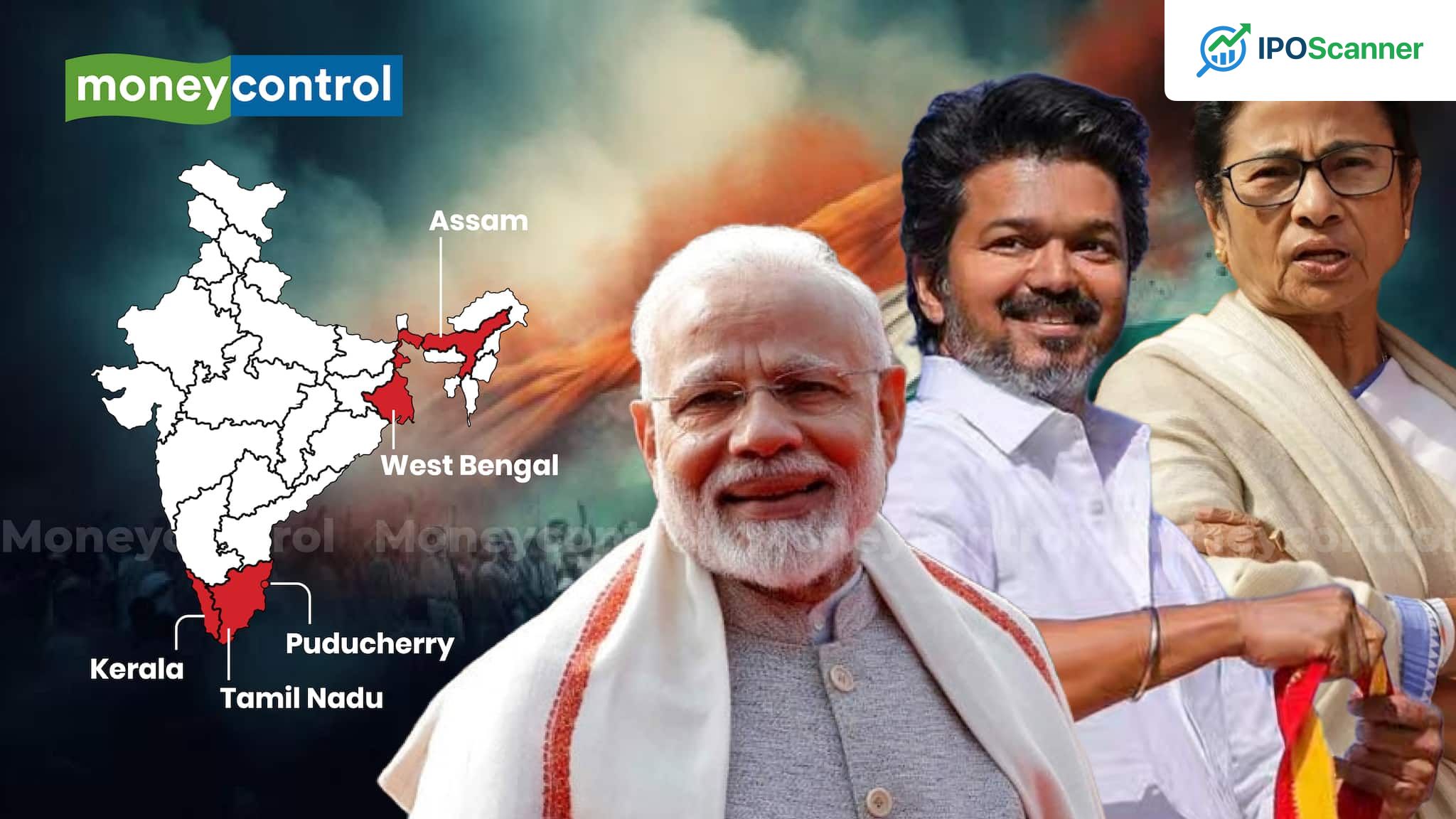
Assembly Election Outcomes Analyzed: Key Insights Emerge
BJP's Hindu Factor Gains Strength, Challenging Muslim Appeasement in Indian Politics
The results of the assembly elections in five states - Assam, West Bengal, Tamil Nadu, Kerala, and possibly Uttar Pradesh - highlight five broad trends that are likely to shape the future of Indian politics. If both the Bharatiya Janata Party (BJP) and its opponents continue on their current trajectories, these trends are likely to strengthen further, influencing not only future assembly polls but also the 2029 Lok Sabha elections.
The Rise of the Hindu Factor
The 'M' factor, which refers to Muslim appeasement, appears to be receding from Indian politics. In 2014, the BJP demonstrated that Muslim appeasement is not necessary to win elections, even in regions where Muslims constitute a significant portion of the electorate. Instead, the consolidation of Hindu votes has increasingly countered the 'M' factor.
| State | BJP Vote Share (2014) | BJP Vote Share (2023) | Change |
|---|---|---|---|
| Uttar Pradesh | 42.63% | 55.30% | +12.67% |
| Bihar | 31.08% | 43.35% | +12.27% |
| Assam | 34.14% | 58.78% | +24.64% |
The BJP's victory in Assam, where it secured a substantial vote share, reinforced what may be described as the 'H' (Hindu) factor. Similarly, in West Bengal, the BJP has steadily expanded its base, pushing the Left and the Congress to the margins. For a long time, West Bengal's political undercurrent reflected a preference for the 'M' factor among non-BJP parties, including the Left rule of three-and-a-half decades and then during the TMC rule over the last 15 years when it was in power.
Alarm Bells for Traditional Parties
The strong performance of TVK, led by film superstar Vijay, signals a warning for traditional parties. If established players fail to deliver, voters are willing to support new entrants without political baggage. The inability of the AIADMK-BJP alliance to capitalise on anti-incumbency, and its loss of ground to a relatively new political force, should prompt serious introspection.
Read also: RBI Policy Preview: A Cautionary Wait Ahead
This is not without precedent. The Aam Aadmi Party received similar backing from Delhi's electorate starting in 2014 and sustained it for several election cycles before eventually losing public trust. In many states, at the level of assembly and local bodies elections, there is a growing sense of fatigue - particularly among younger voters - with the style and substance of politics practiced by traditional parties. The Tamil Nadu results underscore this shifting mood.
End of the Stalwarts' Era
These elections may also mark the political decline of several prominent leaders. Figures such as Mamata Banerjee in West Bengal, Pinarayi Vijayan in Kerala, and M.K. Stalin in Tamil Nadu appear to be nearing the end of their political dominance following significant electoral setbacks.
Their exit could create leadership vacuums within their respective parties and states. It remains uncertain whether parties like the TMC and DMK - often seen as more personality-driven than ideology- or cadre-based - can sustain themselves without these central figures.
Opposition Unity
At the national level, opposition unity is likely to face increasing strain. The Left parties have lost ground to the Congress in Kerala, and in West Bengal, the Congress, Left parties, and TMC contested separately. These divergences highlight underlying tensions, especially when TMC and Left parties' lost elections miserably.
| Party | Kerala | West Bengal | Tamil Nadu |
|---|---|---|---|
| Congress | Gained | Lost | Lost |
| Left Parties | Lost | Lost | Lost |
| TMC | Lost | Lost | Lost |
A key question remains whether leaders like Mamata Banerjee and the Left would accept Congress leader Rahul Gandhi as the face of a national opposition. Given the Congress's limited electoral success outside Kerala and concerns over its leadership, internal contradictions within the opposition alliance could persist. Over time, these divisions may work to the BJP's advantage.
Rise of the 'Outsiders' in BJP
The emergence of leaders like Himanta Biswa Sarma and Suvendu Adhikari in the BJP is an interesting phenomenon that should worry the opposition. Sarma is a former Congress leader, and Adhikari is a former TMC leader. Both these leaders recast themselves as 'icons' of Hindutva in their respective states. This is a roadmap that could be followed by many other opposition leaders who may be feeling 'suffocated' under the burden of dynastic politics and anti-Hindu stance of their parties. This could lead to an influx of leaders from the opposition into the BJP, further weakening the anti-BJP alliance.
More in Economy

FirstClub Secures $55 Million in Funding from Peak XV, Sofina, and Other Investors 9 Months After $22 Million Series A Round
RBI Policy Preview: A Cautionary Wait Ahead

RBI Rate Cuts May Come to an End Amid Rising Oil Prices and Weakening Rupee: Expert Analysis